


Living between languages - Suriname: 50 years of independence
Fifty years after Suriname’s independence, we reflect and look ahead—through the lens of poetry. In this special program, poet and writer Astrid H. Roemer (SUR), literary scholar Michiel van Kempen (NLD), and poet Romeo Grot (SUR) engage in a conversation with moderator Nicole Terborg (NLD) about the multilingual richness of Surinamese poetry. What role does language play in the literary landscape of Suriname? How do writers navigate between Dutch, Sranantongo, and other languages? And what does this multitude of voices reveal about identity, history, and future?
The panel explores personal motivations, historical dynamics, and cultural developments, while offering space for reflection and nuance. Attention will also be given to how Surinamese poetry is received in the Netherlands—and what that reception reveals.
A conversation about language choice, colonial legacies, and poetic power, marking half a century of independence.
Michiel van Kempen
Michiel van Kempen (Oirschot,...
Fifty years after Suriname’s independence, we reflect and look ahead—through the lens of poetry. In this special program, poet and writer Astrid H. Roemer (SUR), literary scholar Michiel van Kempen (NLD), and poet Romeo Grot (SUR) engage in a conversation with moderator Nicole Terborg (NLD) about the multilingual richness of Surinamese poetry. What role does language play in the literary landscape of Suriname? How do writers navigate between Dutch, Sranantongo, and other languages? And what does this multitude of voices reveal about identity, history, and future?
The panel explores personal motivations, historical dynamics, and cultural developments, while offering space for reflection and nuance. Attention will also be given to how Surinamese poetry is received in the Netherlands—and what that reception reveals.
A conversation about language choice, colonial legacies, and poetic power, marking half a century of independence.
Michiel van Kempen
Michiel van Kempen (Oirschot, April 4, 1957) is a Dutch writer, literary scholar, and professor of West Indian Literature at the University of Amsterdam. After studying Dutch Language and Literature in Nijmegen, he worked as a teacher in Paramaribo between 1983 and 1987, where he immersed himself in Surinamese literature. His dissertation, A History of Surinamese Literature, was published in 2002 and is regarded as a standard work in this field.
Van Kempen has written several novels, short story collections, and essays, including Plantage Lankmoedigheid (1997) and Vluchtwegen (2006). He also compiled anthologies such as Spiegel van de Surinaamse poëzie (1995) and Mama Sranan (1999). His work focuses on themes of identity, colonialism, and decolonization.
For his contributions to the study of Caribbean literature, he was awarded the Wassenbergh Penning in 2024, a prestigious distinction in Dutch Studies.
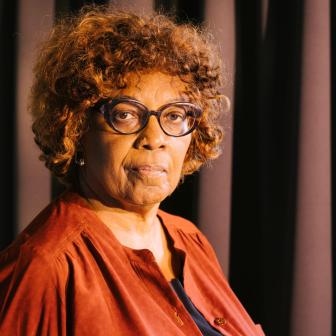
Astrid H. Roemer
Astrid H. Roemer is a Surinamese poet, novelist, and playwright.
In 1970 Roemer published her first book of poetry Sasa: mijn actuele zijn, under the pseudonym Zamani. At the time, she was active in the Black Panther movement, and she chose this Swahili pseudonym to place emphasis on her African heritage. Her first novel, Neem mij terug Suriname (1974), about the displacement of a Surinamese person in the Netherlands, was of unprecedented success in Suriname. In total, Astrid Roemer has published seven poetry collections, nine novels, an autobiography, an anthology as well as several novellas, plays, and collections of poems and short stories.
Roemer’s work is described as unconventional, poetic and lived through. She combines political messages with literary experiment and is exceptionally skillful at infusing personal and human stories with the complexities of a colonial past while commenting sharply on current public debates. To her, works such as Roemers drieling; romantrilogie (2001) are an effort to (re)define and relive her identity as a Surinamese-Dutch woman.
Astrid H. Roemer has been awarded two of the most prestigious Dutch language literary prizes; the P.C Hooft Prize (2016) and the Prijs der Nederlandse Letteren (2021). In both cases, she is the first Surinamese author to receive these prizes. In 2025, the English translation by Lucy Scott of Over de gekte van een vrouw, On a Woman’s Madness (2023), was nominated for the International Booker Prize.
Romeo Grot
Romeo Grot (Paramaribo, 1955) is a Surinamese poet, writer, and performance artist known for his dedication to the promotion of Sranantongo and Afro-Surinamese culture. He made his literary debut in 1973 with the poetry collection Ik and has since published works in both Dutch and Sranantongo. Since 1981, Grot has written primarily in Sranantongo, contributing to the preservation and development of the language.
He is also recognized as an editor of anthologies that explore the role of poetry in Surinamese history. In Fu a lobi gi Sranan (2017), Grot compiled poems reflecting the country's struggle for independence. He also edited Katibo in poëzie, an anthology of over one hundred poems by 67 poets on slavery and its ongoing impact.
Through his work, Grot seeks to raise awareness of Suriname’s history and culture, and to inspire young people to engage with their heritage through education and creative expression.
Nicole Terborg
Nicole Terborg is a journalist and presenter. She works for several television and radio programs in public broadcasting. In addition to her work in broadcasting, Nicole presents and leads a variety of gatherings: from debates and conferences to literary festivals. She has completed three studies: Journalism at the HvU, Religion and Philosophy of Life at the VU and a Master's in Journalism in a Cross-media News Environment at the Media Academy.
Saturday June 14th
20:45 – 21:30
LantarenVenster - Auditorium 5
Pricing
Buy a day- or passe-partout-ticket via the link above.
Language and duration
Language: Dutch
Duration: 45 minutes
Festival poets
_w336_h300_bg.png)
_w336_h300_bg.jpg)
Sponsors