

Poet in Residence
Writing and performing in freedom in Rotterdam
Poet in Residence
Every year Poetry International invites a poet who, for economic, social or political reasons, cannot work in freedom in his or her home country to do a residency in Rotterdam. Here the poet is given every opportunity to write, to be inspired by the city and its inhabitants, to gain relevant contacts in the literary and cultural field, to give workshops and, of course, to perform. The residency ends with a performance at the Poetry International Festival and a publication of texts written during the residency with translations into English and Dutch.
During the stay of around six weeks, the guest writer can be followed during lectures and interview programs organized in various places in the Netherlands and Flanders. To this end, Poetry International collaborates with universities and bookstores and venues such as Perdu, Spraakuhloos, Verhalenhuis Belvédère, Dichters in de Prinsentuin and DeBuren.
The residency program is made possible by a financial contribution from the Ludo Pieters Guest Writer Fund.
_w1800_h965.jpg)
Lyuba Yakimchuck, Ukraine - Poet in Residence 2025
"the words on the tip of a mother tongue
are always the sweetest and the bitterest
don’t lend themselves to a literal translation from language to language
require notes, explanations"
Fragment from MOTHER TONGUE – Lyuba Yakimchuk
Translation: Oksana Maksymchuk
Thanks to the support of the Ludo Pieters Guest Writer Fund and the Ukrainian Institute, and in collaboration with Amnesty International, Poetry International is once again able to offer a place for a Poet in Residence this year. The residency is intended for poets who, due to unsafe or uncertain circumstances in their home countries, are hindered in their freedom to create and share poetry. The residency offers poets a temporary stay of several weeks, providing them with the space and peace to work on new material and to participate in a variety of literary events.
This year, Poetry International welcomes Ukrainian poet Lyuba Yakimchuk. During her stay in Rotterdam, she will work on new poetry and share her voice on various stages across the Netherlands.
Lyuba Yakimchuk
Yakimchuk, a promising new voice in Ukrainian poetry, shares in her work about the impact of the war in Ukraine on language and identity describes. Her work manages to sharply and unexpectedly point out the duality of living in times of war and oppression.
Yakimchuk grew up in Pervomaisk, Luhansk in the east of Ukraine. In 2011 she graduated from the University of Kyiv-Mohyla Academy with a Master’s degree in Theory, History of Literature and Comparative Studies. The literary scholar Polina Barskova has described her use of language as one of the most daring in contemporary Ukrainian poetry and she has been named one of the one hundred most influential people in the arts in Ukraine by the magazine The New Voice of Ukraine.
Yakimchuk has published two books of poetry: Like FASHION in 2009 and Apricots of Donbas in 2015. The latter was written in the first years of the Russian war on Ukraine and received the the International Poetic Award of the Kovalev Foundation in New York. In the collection, Yakimchuk experiments and plays with words and language, reflecting the sound of war. As she says, language is only as beautiful or shattered as the world that surrounds it – a world whose historical events influence the way people use that language. In dedication to Ukraine Lyuba Yakimchuk performed her poem Prayer as part of John Legend’s Free at the 2022 Grammy Awards.
“although women don’t work in mines —
but at factories they very well do
coal handling
and I wash the coal
like I’d wash my braids”
Fragment from Apricots of Donbas – Lyuba Yakimchuk
Translation: Svetlana Lavochkina
During the residency
During her residency, Lyuba Yakimchuk will appear at a variety of venues and events. She is one of the featured poets at the anniversary edition of the Poetry International Festival. In addition, a special event focused on her poetry is being organized in collaboration with Leeszaal West.
Later, Lyuba will travel to the north of the country to perform as one of the poets at Dichters in de Prinsentuin in Groningen—one of the Netherlands’ most beautiful open-air poetry festivals.
To mark her stay, a special publication of her work, titled I’ll have tenderness for breakfast, is being released in collaboration with PrintRoom Rotterdam. This edition will be available at her events during the residency or can be ordered separately.
You can order I'll have tenderness for breakfast by sending an email to info@poetry.nl (8 euros + postage).
Former poets in residence
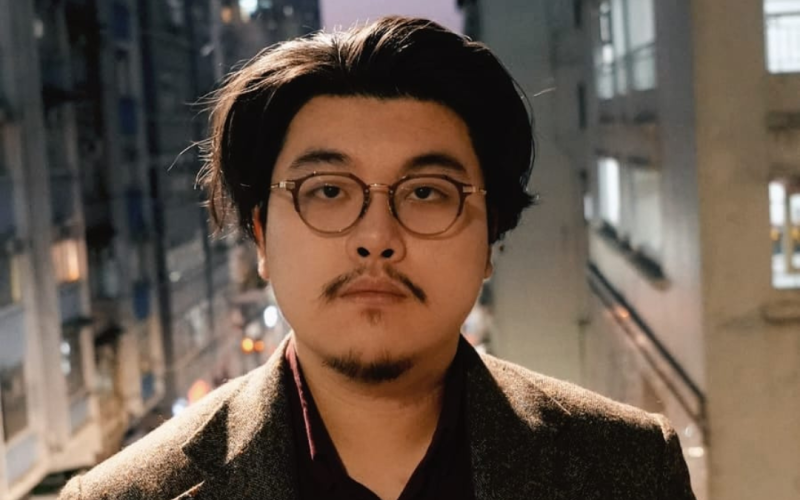
Felix Chow (Hong Kong)
Poet in Residence 2024
"Some people love the breathtaking photos of open umbrellas more than
those who wielded them as shields."
Felix Chow is an academic and poet. His work and the importance of the topics he raises were brought to the attention of Poetry International by Amnesty International. The situation in Hong Kong is volatile. The threat from China to the existence and identity of Hong Kong and its culture makes it crucial now more than ever for artists and their stories to be heard.
Though, the situation in Hong Kong is not new, Felix's generation is. With the echoes of generations before him, Felix writes about his experiences as someone born in 2000. The internet and viral images on social media sometimes offer opportunities to give the rest of the world a glimpse into their reality, but there is also the painful everyday airiness that feeds tourism.
Felix writes about how family names and country based identities are sometimes so unbearably intertwined. The tone of his poetry is cynical, in a way that only young people thinking about the future can be. This makes his work vulnerable and confrontational. It is as though his work challenges you: this is the story, did you expect an Instagram filter?
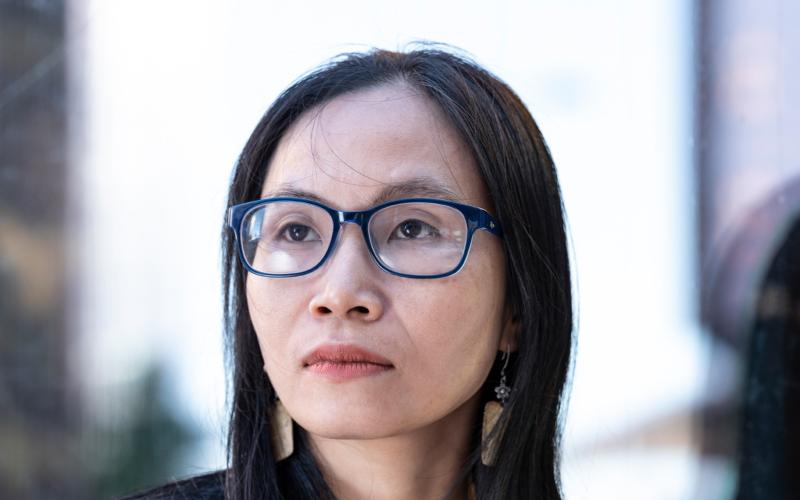
Nhã Thuyên (Vietnam)
Poet in Residence 2022
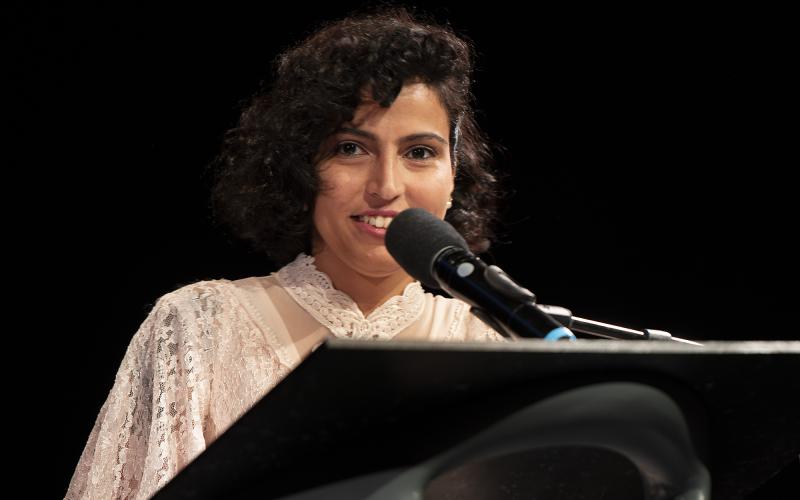
Mona Kareem (Kuwait/USA)
Poet in Residence 2019
"As you go on to space, floating and strolling,
we decided to stay home, make use of dreams,
keep the earth company, fingering near pasts
open up wounds."
Poet, translator and journalist Mona Kareem was born in Kuwait but lives in the United States, where she earned a PhD in Comparative Literature. She is the author of three collections of poetry in Arabic. Her first collection will be published in English in 2020. Born herself as a "bidoun," a population considered stateless and denied citizenship by the government of Kuwait, she is pushing against the violation of civil rights in her journalistic work. Her poetry contains a strong female voice that convincingly articulates political and social, as well as personal, issues, with room for humor and lyricism.
Poems she wrote here have appeared in the Arabic-, Dutch- and English-language collection Femme Ghosts / Vrouwelijke geesten (Publication Studio). One of the poems is the acclaimed "Eulogies for futures to come," which Kareem performed with the Metropole Orchestra during the festival opening.
Photo: Mona Kareem © Hielke Grootendorst
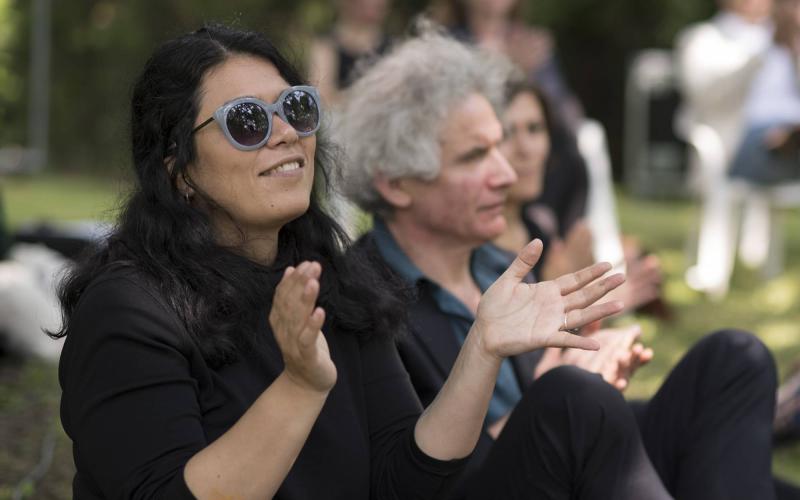
Dolores Dorantes (Mexico/USA)
Poet in Residence 2018
"To lose space. To lose water. To lose place. To lose attitude. To lose respect. To lose proactivity. To lose territory. To lose blood. To lose resources. To lose environments. To lose form. To lose meaning. To lose one’s mind. To lose respect. To lose government. Copiously. To reassemble oneself. In curiosity. In heat. In structure."
Dolores Dorantes was supposed to participate in the Poetry International Festival in 2012 but had to flee her homeland just before leaving for Rotterdam because of death threats. As long as her asylum application was pending in the United States, she could not travel, and she had to miss the festival. It is therefore extra special that she was our guest here in Rotterdam for six weeks in 2018 as poet in residence.
"Hacer es deshacer." Her poetry constructs and deconstructs, remembers and lets forget, gives language to the cruelty, pain and violence of her homeland and also questions this language again. The female voice, always plural and ambiguous, has a central role in Dorantes' work. In addition to her writing, she is a priest in the Buddhist Mahajrya tradition.
Photo: Dolores Dorantes © Hielke Grootendorst
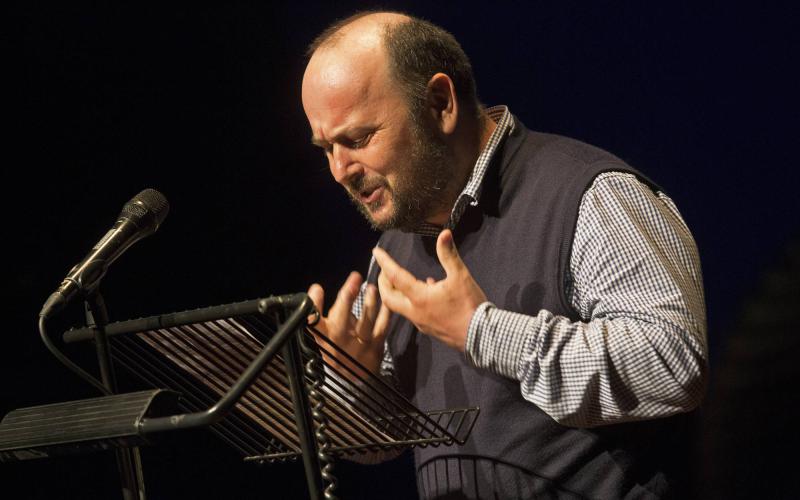
Dumitru Crudu (Moldava)
Poet in Residence 2017
"the people who knew my father knew a strong and courageous man. I don’t resemble him one little bit. I’ve come to realise this with every passing day since he died."
In 1994, Dumitru Crudu debuted with two books of poetry simultaneously. Since then, he has written seven plays, novels and collections of short stories. Crudu's poems are narrative. They tell personal histories and at the same time paint a more general picture of life in the former Soviet republic. With humor, Crudu's poetry highlights the everyday, as well as major themes such as illness and death. His poetry is in the midst of reality and then depicts it in a completely unique way. Crudu belongs to the movement of "Fracturism," a movement developed by writers who write as they live and banish social lies from their poetry.
Photo: Dumitru Crudu © Tineke de Lange
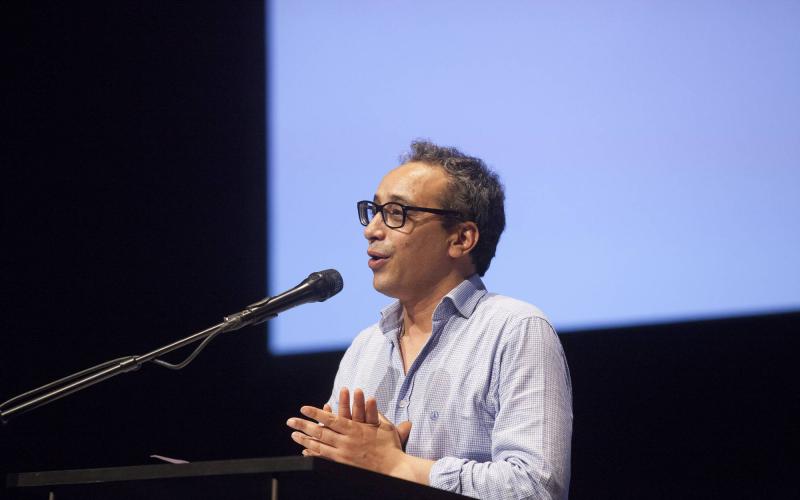
Abdel-ilah Salhi (Morocco)
Poet in Residence 2016
"I check my bag for the tenth time/ lest I forget inside what might prompt the alarm at the customs’ gateway/ I fumble for the passport in my pocket,/ like someone trying to get rid of a bomb/ planted in the heart"
Journalist and radio correspondent Abdel-ilah Salhi is a skilled and inspired storyteller. His poetry is therefore characterized by a strong narrative character. In a light tone, he illuminates the humor and tragedy of our daily concerns, often from a surrealistic perspective. Living in France, his sources of inspiration. are often French, but he writes in Arabic. Once in France, he seized the opportunity to delve into modern Arabic literature in exile; in fact, many exiled Arab writers lived in France. This is how he met the Iraqi poet Abdelkader Al Janabi, and through him he also came into contact with the group of Arab surrealists in Paris.
Photo: Abdel-ilah Salhi © Tineke de Lange
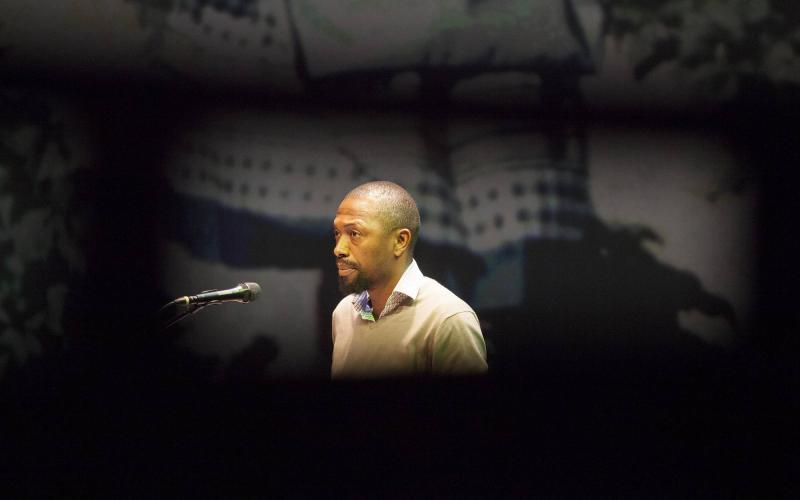
Togara Muzanenhamo (Zimbabwe)
Poet in Residence 2015
"We are marching him to rest. It’s simple and sad things like this that need not be rehearsed, we are born to death and bred to carry its weight. I can’t help but think how different he looked as he slowly approached his end: a reversal of fire in his eyes, a back-burning – as though he was being reclaimed, as though whatever he thought he had was not his."
Togara Muzanenhamo worked as a journalist for many years until he started farming to better focus on his poetry. As a poet, he likes to isolate himself; working hours on the farm suit him and give structure to his poetry. In the mornings he works in the fields, in the afternoons he writes poems. The tone of these poems changes, from deeply saddened when it is about a lost home or father, light-hearted and euphoric when he describes unspoiled landscapes, to resigned to the realization that life in the country simply doesn't change much.
Photo: Togara Muzanenhamo © Tineke de Lange
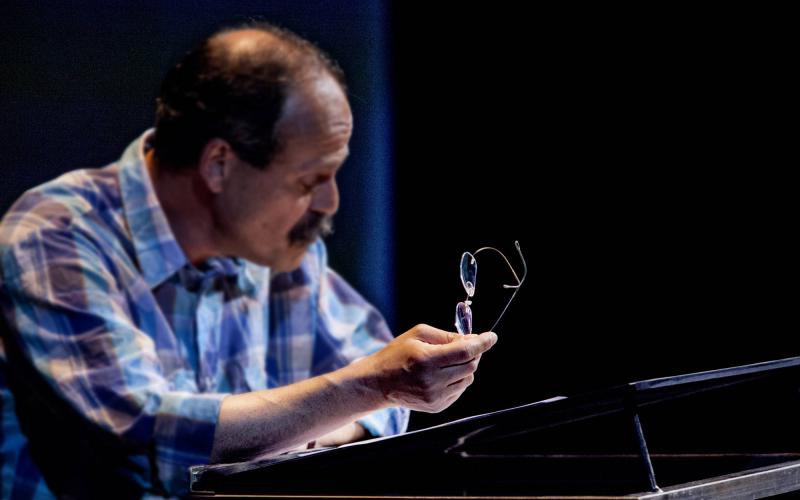
Roni Margulies (Turkey)
Poet in Residence 2014
"Am I more out of place here or in Istanbul?
Why am I more at home on water than when
I have both feet planted firmly on some land?
And why, on the threshold of turning sixty,
do I still expect these questions to be answered?"
With eyes and ears wide open, Roni Margulies gives his impressions of Rotterdam a place in his beautiful poems with almost photographic precision. Margulies is fascinated by the past. Identity, migration, borders, language and oppression are also themes in his work. Subtly and in clear words, he writes about big events based on small observations. What strikes him in the port city and how does he reflect on it in his poems? We look forward to a happy reunion with the Turkish poet who was also a guest at the festival in 2008.
Photo: Roni Margulies © Pieter Vandermeer
Sponsors